By Dr. Rajesh Biswas, Founder & CEO, Lifesystem Analytics Pvt Ltd
How do we transform complex biological data into scalable, high-yield industry performance? 🚀
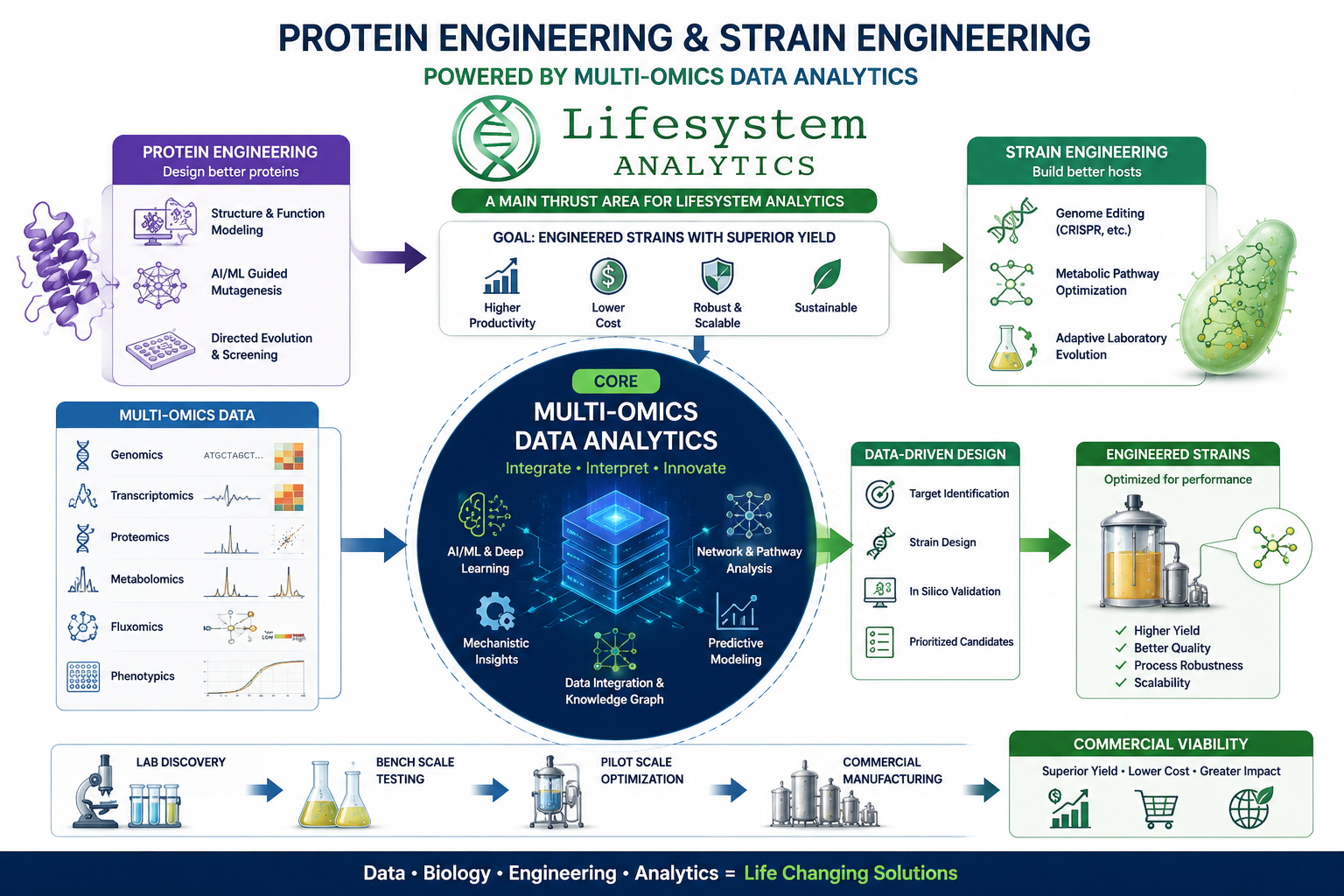
The secret lies in moving away from trial-and-error biology and embracing Omics-Driven Strain Engineering & Model-Guided Flux Optimization. By combining multi-level genome engineering with predictive modeling, we can systematically eliminate cellular bottlenecks, balance metabolic pathways, and dramatically reduce the metabolic burden on host microorganisms.
🔍 The Core Pillars of Modern Smarter Biological Design
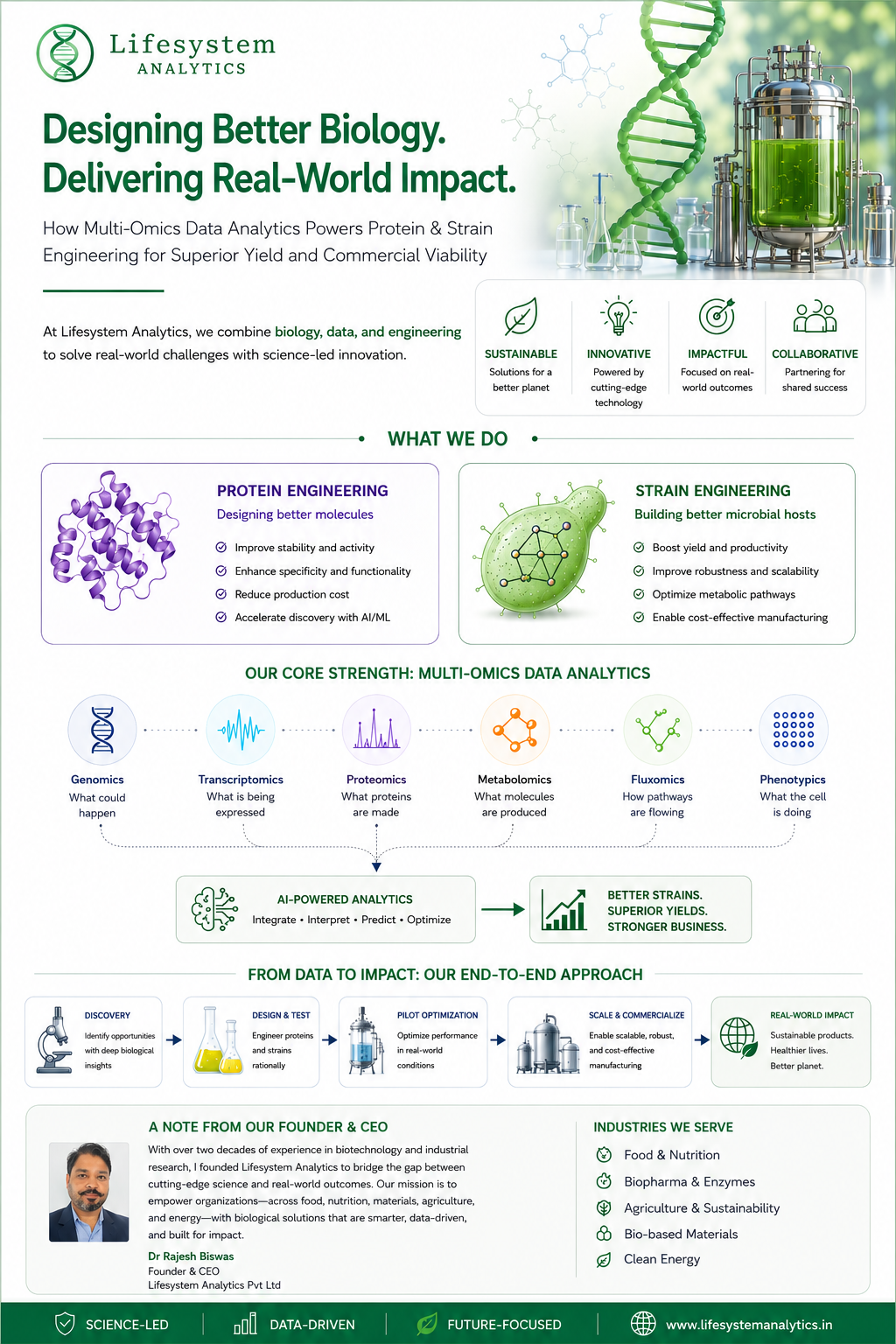
- Integrated Multi-Omics Data: We stack Genomics, Transcriptomics, Proteomics, and Metabolomics to paint a complete picture of cellular behavior, mapping out genotype-phenotype trait correlations with deep learning heatmaps.
- Model-Guided Flux Optimization: Using digital models of the microbial chassis, we can predict exactly how target pathways will behave in silico before ever stepping into the wet lab.
- Multi-Level Genome Engineering: Instead of isolated edits, we execute precise, data-driven modifications across gene circuits and pathway frameworks simultaneously to optimize production.
- Validated Superior Yield: The ultimate destination of this iterative cycle is an optimized, industrial-scale fermentation process that ensures consistent, stable, and highly productive batch performance.
By bridging data science with synthetic biology, we aren’t just modifying cells—we are programming efficient cellular factories optimized for Precision Fermentation.